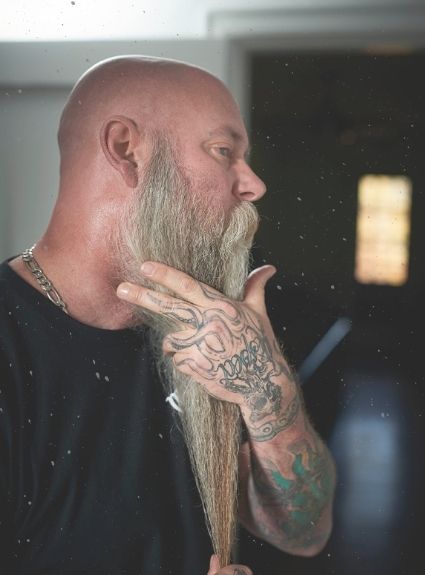
Why Is My Beard Turning Ginger?
Why Is My Beard Turning Ginger?
You grow a beard expecting it to match your hair… and suddenly there it is, random copper, red, or full-on ginger tones staring back at you in the mirror.
You’re not imagining it. And no, something hasn’t “gone wrong.”
Here’s what’s actually happening.
It’s All Genetics (Even If You’re Not a Redhead)
The short answer?
Your beard may express different genetic traits than the hair on your head.
Hair colour is controlled by melanin, specifically two types:
- Eumelanin → darker tones (brown/black)
- Pheomelanin → red/yellow tones
Even if the hair on your head is dark, your beard may have a higher concentration of pheomelanin. That’s what creates those ginger or copper strands.
This is often linked to variants of the MC1R gene, the same one associated with red hair, but you don’t need to be a redhead for it to show up.
Translation:
Your beard is revealing parts of your genetic mix that your scalp hair doesn’t.

Beards Are Naturally More “Complex” in Colour
Unlike the hair on your head, beard hair tends to be:
- Coarser
- More porous
- More variable in pigment
That’s why it’s common to see:
- Brown + red + blonde all in one beard
- Lighter patches around the chin or cheeks
- Warmer tones showing up in sunlight
A beard rarely grows in as one flat, uniform colour, and honestly, that’s part of what makes it look natural and full.
Sun Exposure Can Bring Out Red Tones
If you’ve noticed your beard looking more ginger in the summer, you’re not crazy.
UV exposure can:
- Break down darker pigments
- Reveal underlying warm tones
- Lighten the overall appearance of the beard
That means a beard that looks dark indoors might suddenly show copper or auburn hues outside.
Sun can affect more than colour, too. If your beard becomes drier or rougher during warmer weather, learn more about how summer affects beard hair and follicles.
Dry, Damaged Hair Can Look Warmer
Here’s where grooming actually plays a role.
When beard hair gets:
- Dry
- Brittle
- Overwashed
- Exposed to harsh conditions
The cuticle roughens, and the hair reflects light differently. This can make warm tones (like red or orange) appear more noticeable.
It’s not changing your genetics, but it can amplify what’s already there.
If dryness comes with flaking, irritation or discomfort, it may also help to understand why beards get itchy and how to fix it.
So… Can You “Fix” It?
Short answer: No. And you don’t need to.
A ginger tint in your beard isn’t a flaw. It’s normal, common, and honestly? It adds depth and character.
Trying to “correct” it usually means:
- Dyeing (high maintenance, most often unnatural-looking)
- Fighting your natural hair instead of working with it
A better approach?
Keep your beard healthy so it looks its best—whatever colour it is.
How to Make Your Beard Look Its Best (No Matter the Colour)
Focus on condition, not correction:
- Add moisture with a water-based beard conditioner when your beard feels especially dry.
- Seal in moisture and soften coarse hair with a quality beard oil or beard balm.
- Avoid over-washing, and use a gentle beard shampoo when cleansing.
- Use products that actually work (not just products that smell good)
A well-conditioned beard will:
- Reflect light more evenly
- Look richer in tone (not washed out or brassy)
- Feel softer and more manageable
If your beard is turning ginger, it’s not random, and it’s definitely not a problem.
It’s just your genetics showing up in a different way.
And in most cases?
That mix of tones is exactly what makes a beard look real, textured, and full of character.
Leave a comment
Comments will be approved before showing up.